
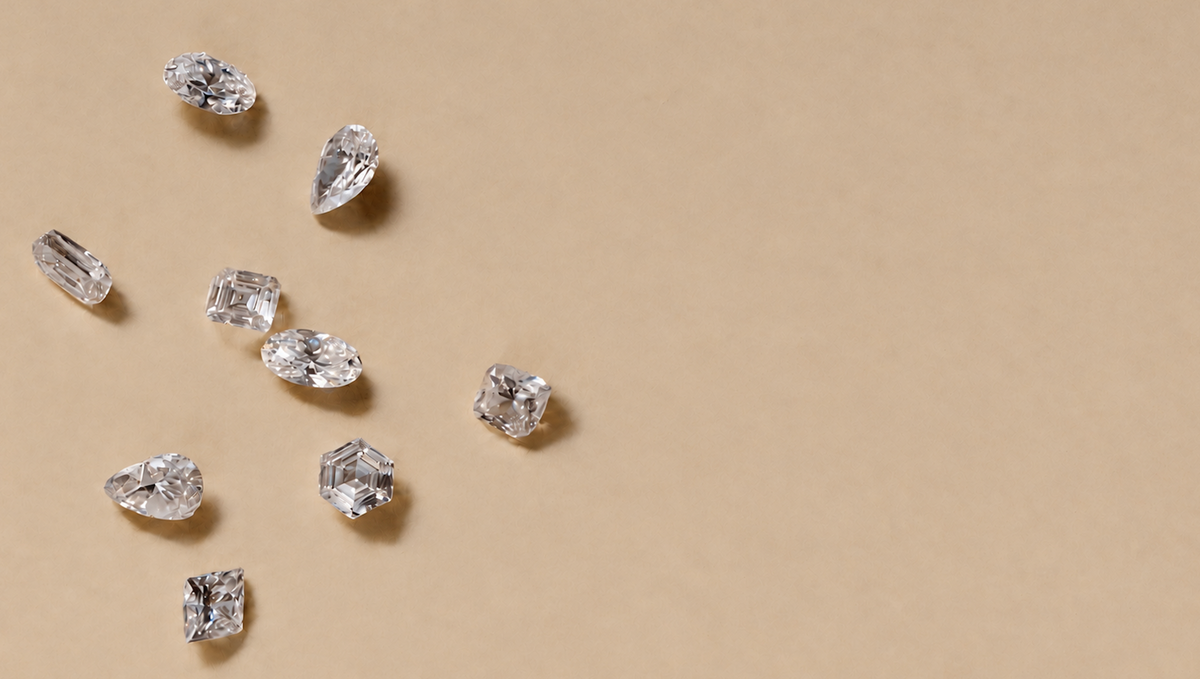
Cut
Cut is the most important of the four. It determines how a diamond returns light: its brightness, its fire, and its sparkle. A well-cut stone can look larger and whiter than its grades suggest, while a poorly cut one can look dull at any size.
Color
Color is graded from D, entirely colorless, to Z, which carries a visible warmth. The difference between neighboring grades is rarely visible to the eye, and the right choice often depends on the metal. A near-colorless stone can look perfectly white set in yellow gold.
Clarity
Clarity measures the small natural characteristics found within and on the surface of a diamond. Most are invisible without magnification. What matters is that a stone is eye clean, with nothing to distract from its brilliance when it is worn.
Carat
Carat is a measure of weight, not size. Two diamonds of the same weight can look quite different depending on how they are cut, which is why we consider how a stone faces up, not only what it weighs.

Natural and Lab-Grown
We work with both. A natural diamond formed over billions of years, and its rarity is part of its meaning. A lab-grown diamond is created under controlled conditions and is physically, chemically, and optically the same, often allowing a larger or finer stone within the same budget. Both are assessed for the same four qualities and examined with the same care. The choice is a personal one, and we will help you make it.
The Balance
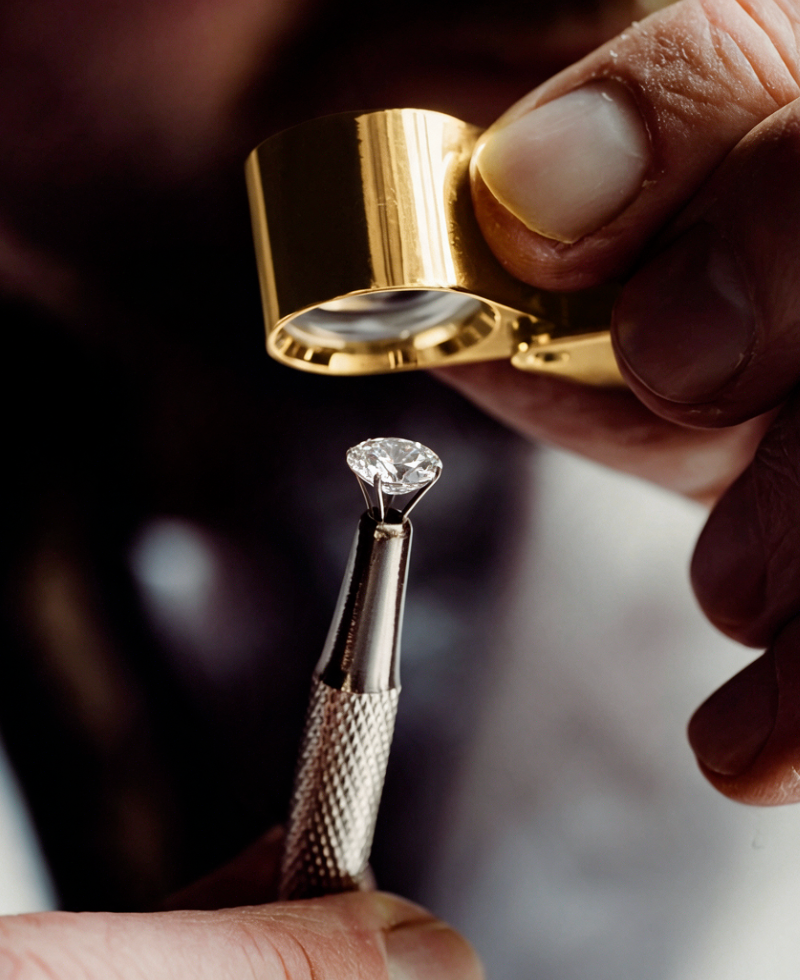
The four are not meant to be maximized one by one. The most beautiful diamond is the one where they are balanced well, and we will guide you on where to invest and where the difference will never be seen. Every stone we source is examined and verified, never assumed, and center diamonds of one carat and above are accompanied by a GIA grading report.